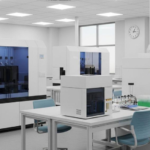
Clear, reliable assay results often come down to what happens between incubation and detection, the washing step. Residual reagents, inconsistent removal of unbound substances, or uneven washing across wells can quietly compromise even well-designed experiments. That’s why microplate washers play a critical role in maintaining data integrity across plate-based assays.
As laboratories scale operations and handle larger sample volumes, maintaining consistency manually becomes increasingly difficult. Automated washing brings control and repeatability to a step that directly impacts signal quality, helping laboratories produce reliable, reproducible results across runs.
1. Ensures Consistent Washing Across Wells
Microplate washers deliver uniform washing across all wells, eliminating variability caused by manual techniques. Consistency in wash cycles ensures that unbound substances are effectively removed, which is essential for accurate assay outcomes.
2. Improves Assay Accuracy and Data Reliability
Incomplete or inconsistent washing can lead to high background signals and unreliable data. An automated microplate washer ensures precise control over wash parameters, improving signal clarity and overall assay accuracy.
3. Reduces Human Error in Manual Washing
Manual washing introduces variability in timing, volume, and technique. Automated systems remove these inconsistencies by standardizing every wash cycle, reducing the risk of errors that can affect experimental results.
4. Enhances Throughput in High-Volume Labs
High-throughput laboratories require speed without compromising quality. Microplate washers enable rapid processing of multiple plates, allowing labs to maintain productivity while ensuring consistent washing performance.
5. Minimizes Cross-Contamination Risks
Cross-contamination can significantly impact assay integrity. Automated washing systems are designed to minimize carryover between wells, protecting sample integrity and improving experimental reliability.
6. Supports Integration with Automated Workflows
Modern laboratories rely on interconnected systems. Microplate washers integrate seamlessly with liquid handlers, readers, and other instruments, enabling continuous and efficient workflow automation. This integration reduces manual intervention and improves overall process consistency.
7. Improves Workflow Efficiency and Resource Utilization
Automation optimizes the use of reagents, time, and labor. By standardizing washing steps, microplate washers reduce waste and ensure efficient use of resources, contributing to cost-effective lab operations.
Achieving Reliable and Reproducible Laboratory Outcomes
Consistent washing is a foundational requirement for accurate and reproducible laboratory results. Microplate washers eliminate variability, reduce contamination risks, and support high-throughput workflows, making them indispensable in modern laboratories.
Copia Scientific provides certified pre-owned laboratory solutions through its Copia 360 System, offering validated performance, documentation, and warranty-backed reliability. Integrating an automated plate washer into laboratory workflows helps ensure consistent results while improving efficiency and scalability.
Connect with Copia Scientific today to strengthen lab performance with trusted solutions.