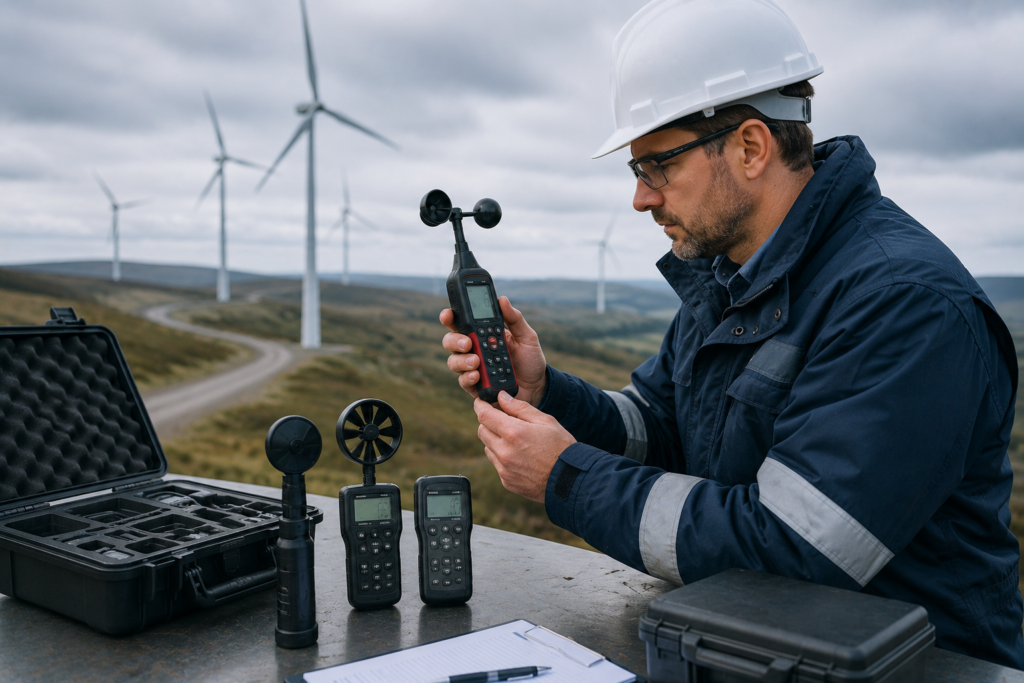

Industrial operations rely on accurate wind data to support safety, automation, and environmental monitoring. However, selecting the wrong wind-measuring instrument can lead to installation issues, unstable readings, and long-term maintenance problems.
Many businesses focus only on sensor cost or measurement range during procurement. In reality, factors such as communication protocols, environmental exposure, calibration practices, and mounting conditions have a major impact on long-term performance. Understanding these risks early helps prevent operational disruptions later.
1. Ignoring Output Signal Compatibility for a Wind Measuring Instrument
One of the most common purchasing mistakes involves overlooking signal compatibility between the sensor and the receiving system. A wind-measuring instrument must integrate seamlessly with existing automation platforms and monitoring infrastructure.
Industrial systems may require:
- Analog milliampere outputs
- Voltage-based outputs
- Digital communication protocols
- Controller network integration
Basic sensors may support limited communication options. However, advanced industrial environments often require broader compatibility with building automation systems, programmable controllers, or environmental monitoring platforms.
In automated agricultural control systems, mismatched communication protocols can delay integration and create unstable data transmission. This may interrupt automated ventilation, irrigation, or environmental control processes.
Evaluating output requirements before purchase helps reduce commissioning delays and integration challenges.
2. Failing to Match the Wind Measuring Device to Environmental Hazards
Environmental conditions directly affect sensor durability and measurement reliability. Selecting the wrong wind-measuring device for the operating environment can increase maintenance frequency and shorten operational lifespan.
Mechanical cup sensors contain moving components that may wear out under harsh conditions. Ultrasonic models eliminate moving parts and are often selected for environments exposed to freezing temperatures, dust, or heavy moisture.
Important environmental considerations include:
- Corrosive exposure
- Ice accumulation
- Debris impact
- Continuous vibration
- Temperature fluctuations
Ingress protection ratings should also be reviewed carefully before installation.
For example, rugged propeller sensors are often deployed in environments with heavy debris where airflow conditions are unpredictable. Severe weather conditions can gradually affect moving mechanical parts, leading to inconsistent measurements over time.
Matching the sensor design to environmental demands helps improve reliability and reduce maintenance interruptions.
3. Overlooking Calibration Standards for a Wind Speed Measuring Device
Calibration plays a major role in maintaining accurate wind measurements. Businesses that overlook calibration standards during procurement may face inconsistent readings and compliance challenges later.
A reliable wind speed measuring device should support:
- Wind tunnel repeatability verification
- Traceable calibration standards
- Stable long-term measurement consistency
Environmental variables such as temperature and humidity can also influence air density calculations, affecting measurement accuracy in certain applications.
In renewable energy turbine arrays, calibration consistency is especially important for maintaining operational compliance and performance monitoring. Many facilities verify reference sensors before formal calibration runs begin to ensure stable measurement baselines.
Evaluating calibration procedures before purchase helps support long-term operational accuracy.
4. Compromising on Placement for the Wind Measuring Instrument
Even a high-quality wind measuring instrument can produce unreliable data when installed incorrectly. Placement strategy directly affects measurement consistency.
Important placement factors include:
- Mounting height
- Distance from structural obstructions
- Turbulence exposure
- Electrical interference risks
Sensors installed near buildings, trees, or large equipment may experience distorted airflow patterns known as wind shadows. These conditions reduce measurement stability.
Lightning protection placement should also be carefully reviewed to minimize electrical interference during operation.
Construction crane apex installations provide a good example of why positioning matters. Sensors placed too close to surrounding structures often experience turbulence caused by nearby buildings and shifting airflow patterns.
Careful placement planning improves data reliability and reduces false readings.
5. Neglecting Mounting Hardware Specifications for the Wind Measuring Instrument
Mounting hardware is often treated as a secondary consideration during procurement. However, poor mounting support can affect long-term stability and sensor durability.
Industrial installations should evaluate:
- Rugged metal body construction
- Corrosion resistance
- Bracket compatibility
- Vibration control support
Different environments require different mounting solutions depending on surface conditions and environmental exposure.
Remote solar farm perimeter installations often require reinforced mounting systems capable of handling continuous vibration and changing weather conditions. Inadequate support structures may loosen over time and affect measurement stability.
Proper mounting hardware helps maintain sensor alignment and operational consistency across long deployment periods.
Avoiding Long-Term Wind Measurement Problems
Selecting an industrial wind sensor involves more than reviewing basic specifications. Communication compatibility, environmental durability, calibration standards, placement strategy, and mounting stability all contribute to long-term performance.
Overlooking these factors can lead to unreliable measurements, integration delays, and increased maintenance requirements. A structured evaluation process helps businesses select equipment better suited for demanding industrial conditions.
Organizations evaluating environmental monitoring systems can contact Comptus to select the right wind-speed measuring device for more stable operation and long-term measurement reliability.