
In industrial and commercial construction, terminology can mean the difference between compliance and risk. One of the most common misconceptions involves the distinction between a fire barrier and a firewall.
Though the terms are often used interchangeably, they serve distinct functions in protecting structures and saving lives. Understanding how these systems differ—and how to apply them correctly—can prevent devastating fire spread and structural collapse.
Structural Purpose of Fire Wall Protection in Industrial Construction
A fire wall is a structural element designed to divide a building into sections, each capable of containing a fire without collapse or spread for a designated time period. Unlike standard partition walls, fire wall protection requires the wall to remain intact even if structural components on one side fail.
In industrial environments, where flammable materials, equipment, and electrical systems coexist, fire wall protection confines damage to designated areas and safeguards workers and assets. It acts as an independent structural barrier, maintaining its load-bearing capacity during extreme fire conditions, and allowing adjacent areas to remain safe and operational.
How Fire Barrier vs Firewall Systems Perform Under Real Conditions
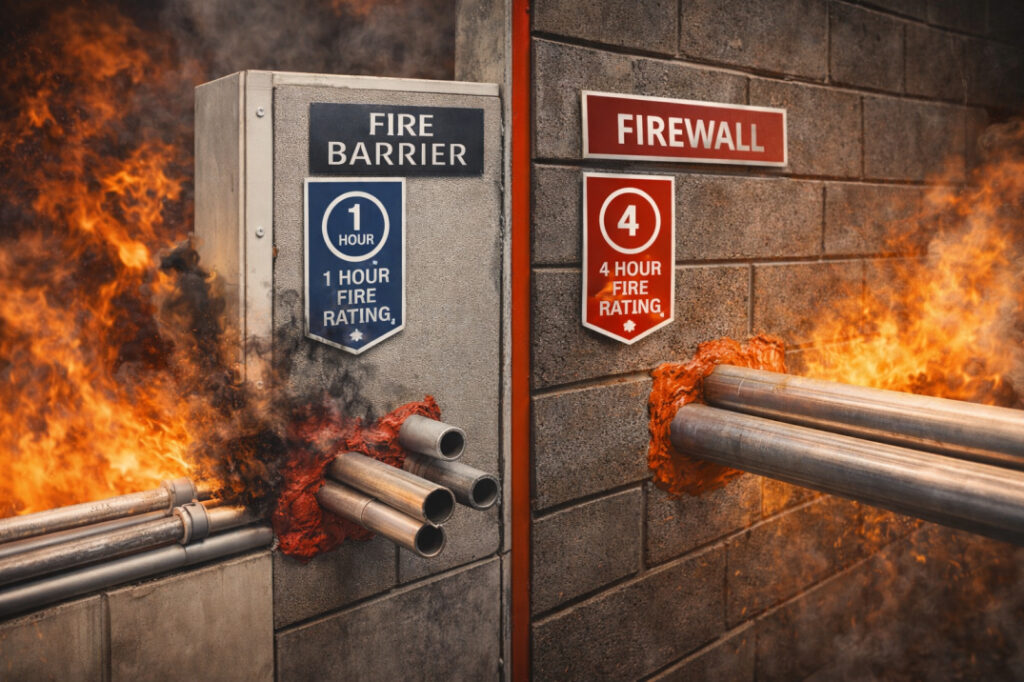
When comparing fire barrier vs firewall systems, performance under real-world conditions highlights their distinct purposes.
- Fire barriers are interior walls or ceilings that restrict flame and smoke movement within a single building compartment. They protect escape routes and sensitive equipment areas.
- Fire walls, by contrast, provide complete separation between sections of a facility. They extend from foundation to roof and often continue beyond the roofline for additional containment.
Both systems utilize fire-rated materials that have been tested to ASTM and NFPA standards, but their applications differ significantly. A fire barrier is ideal for internal compartmentation, while a fire wall is critical for dividing structures into isolated fire zones.
Best Practices for Firewall Barrier Installation and Compliance
Achieving true performance from these systems depends on precise firewall barrier installation practices and compliance with building codes. Installation should always be handled by qualified professionals who understand both design specifications and inspection protocols.
Key considerations include:
- Material selection: Use rated panels, boards, and sealants that have been tested for the required fire duration.
- Continuity: Ensure the wall extends continuously from the slab to the roof deck with no unsealed penetrations.
- Structural anchoring: Provide reinforcement capable of withstanding fire exposure and pressure differentials.
- Certification and inspection: Verify that materials and assemblies meet local code approvals before commissioning.
Proper installation ensures that both fire barriers and fire walls deliver their intended level of protection when it matters most.
Maintenance and Inspection for Long-Term Integrity
Even the best-built fire-rated systems degrade over time without regular maintenance. Routine inspections help identify issues such as compromised seals, damaged panels, or penetrations caused by subsequent construction activities.
Maintenance programs should include:
- Annual visual assessments by certified inspectors.
- Post-repair evaluations after facility upgrades or retrofits.
- Recordkeeping of all testing, repairs, and compliance certifications.
Neglecting maintenance can reduce the fire resistance of both systems, leaving critical structures vulnerable during an emergency.
Conclusion – Choosing the Right Fire-Rated Solution for Your Facility
Selecting between fire barriers and fire walls requires understanding your facility’s risk profile, occupancy type, and operational hazards. While a fire wall provides complete separation between sections of a building, a fire barrier supports internal protection within compartments.
The success of either system, however, depends on the proper installation of a firewall barrier, consistent inspection, and adherence to relevant codes. By investing in the right fire-rated solution, facility owners can ensure compliance, minimize risk, and protect lives when every second counts.