
Industrial operations increasingly rely on precise motor control to improve efficiency, protect equipment, and maintain consistent output. Fixed-speed motors often consume more energy than necessary and place added stress on mechanical components. As a result, AC drives have become a standard solution across manufacturing, processing, and infrastructure environments.
By adjusting motor speed to match real-time demand, AC drives help facilities manage energy use while improving control and reliability. Selecting the correct drive type is essential, as different applications place different demands on torque, speed range, and operating conditions.
Understanding the main categories of AC drives helps ensure the right match between equipment and operational requirements.
Common Categories of Industrial AC Drives
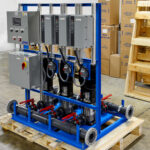
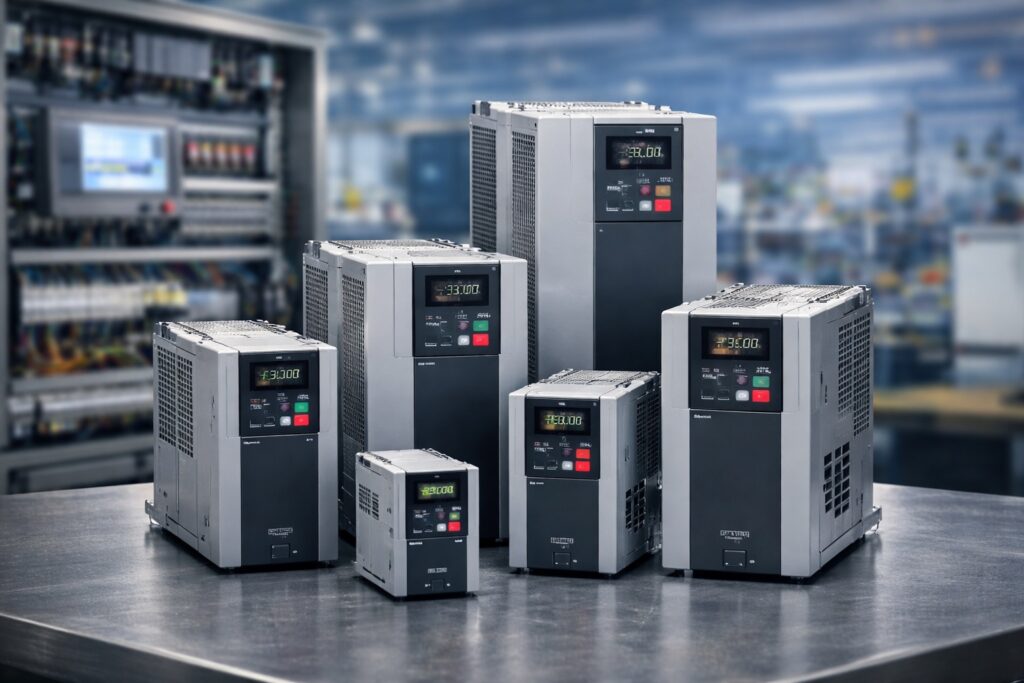
Industrial environments use several types of AC drives, also known as variable frequency drives, and each is designed to address specific performance needs. These drives control motor speed by adjusting the frequency and voltage supplied to the motor, making them suitable for pumps, fans, conveyors, and compressors.
Another category includes soft starters. While not full speed-control devices, soft starters manage motor acceleration and deceleration, reducing inrush current and mechanical shock. They are often used where speed variation is not required, but a controlled startup is beneficial.
Vector drives provide more advanced control by regulating both speed and torque. These drives are commonly used in applications that require precise load handling, such as material-handling systems, mixers, and specialized production equipment.
Servo drives, while sometimes grouped separately, also fall within the broader AC drive landscape. They are used where high precision and fast dynamic response are critical, such as robotics and automated positioning systems.
Each category offers different levels of control, complexity, and cost, making application requirements a key factor in selection.
Application-Based Drive Selection
Choosing the right drive begins with understanding the application. Variable-torque applications, such as fans and pumps, benefit from standard industrial AC drives designed to reduce energy consumption during partial load operation.
Constant-torque applications, including conveyors and crushers, require drives capable of delivering consistent torque across the speed range. In these cases, drive sizing and thermal performance become especially important.
High-inertia applications, such as centrifuges or large rotating systems, demand drives with robust braking and acceleration control. Proper selection ensures smooth operation and prevents overvoltage or mechanical stress.
Environmental conditions also influence selection. Drives operating in dusty, humid, or high-temperature environments may require specific enclosures or cooling methods to maintain reliability.
Efficiency and Operational Benefits
One of the primary advantages of AC drives is improved energy efficiency. By matching motor output to actual demand, drives reduce wasted energy and lower operating costs. This is particularly valuable in systems that operate continuously or experience fluctuating loads.
AC drives also improve operational stability. Controlled acceleration and deceleration reduce mechanical wear, extending the life of motors, belts, and couplings. Reduced stress translates into fewer breakdowns and more predictable maintenance schedules.
From a process standpoint, drives enable smoother operation and better control. Speed adjustments can be made electronically rather than mechanically, allowing faster response to changing production needs.
These benefits combine to support higher uptime and more efficient use of electrical and mechanical resources.
What to Evaluate When Choosing AC Drive Suppliers
Selecting reliable AC drive suppliers is as important as choosing the correct drive type. Suppliers should offer technical expertise to support drive sizing, application evaluation, and integration with existing systems.
Consistency in product availability helps standardize installations across facilities, simplifying maintenance and spare parts management. Access to documentation, configuration support, and troubleshooting assistance also plays a key role in long-term reliability.
Evaluating supplier experience across similar applications helps ensure drives are selected and applied correctly from the start, reducing the risk of misconfiguration or premature failure.
Matching the Right Drive to the Right Application
Industrial motor control depends on selecting the appropriate drive for the task at hand. Different applications demand different levels of speed control, torque performance, and environmental protection. Understanding the categories of AC drives and how they are used helps facilities make informed decisions.
When properly selected and supported, industrial AC drives improve efficiency, protect equipment, and support consistent operation. Matching the right drive to the proper application ensures long-term performance and reliability across modern industrial systems. For engineered drive solutions designed for industrial use, OnDrive Inc. supports a wide range of applications through our product offerings. Contact us today!