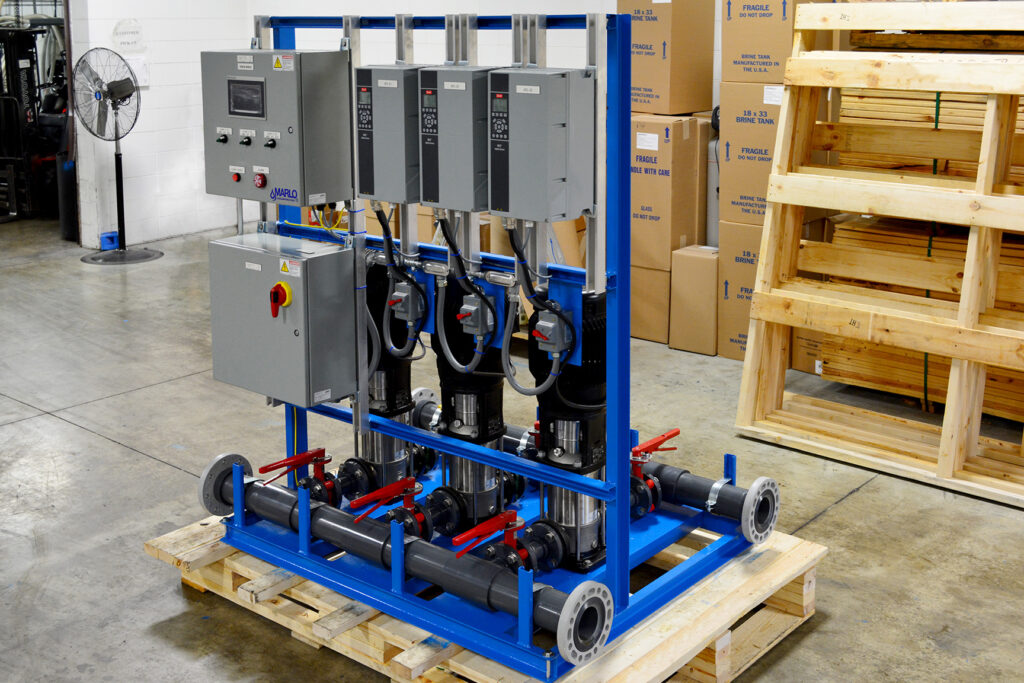

Sizing an industrial water pressure booster pump directly affects system stability and operational efficiency. Many industrial facilities experience pressure drops due to elevation changes, friction losses, and fluctuating demand. A booster system resolves these challenges only when sizing reflects real operating conditions.
Accurate sizing starts with peak flow demand. Engineers must consider simultaneous usage rather than average consumption. Pressure requirements also extend beyond outlet needs. Pipe length, fittings, valves, and elevation changes all contribute to total dynamic head and influence system performance.
System configuration also plays an important role. Multi-pump booster systems support staged operation, improving efficiency during lower demand while maintaining pressure during peak periods. Control strategy further shapes how the system responds to changing conditions.
Water temperature, duty cycle, and future capacity should also be evaluated. When sizing decisions account for these factors, booster systems deliver consistent pressure, improved efficiency, and reliable long-term operation. Read more