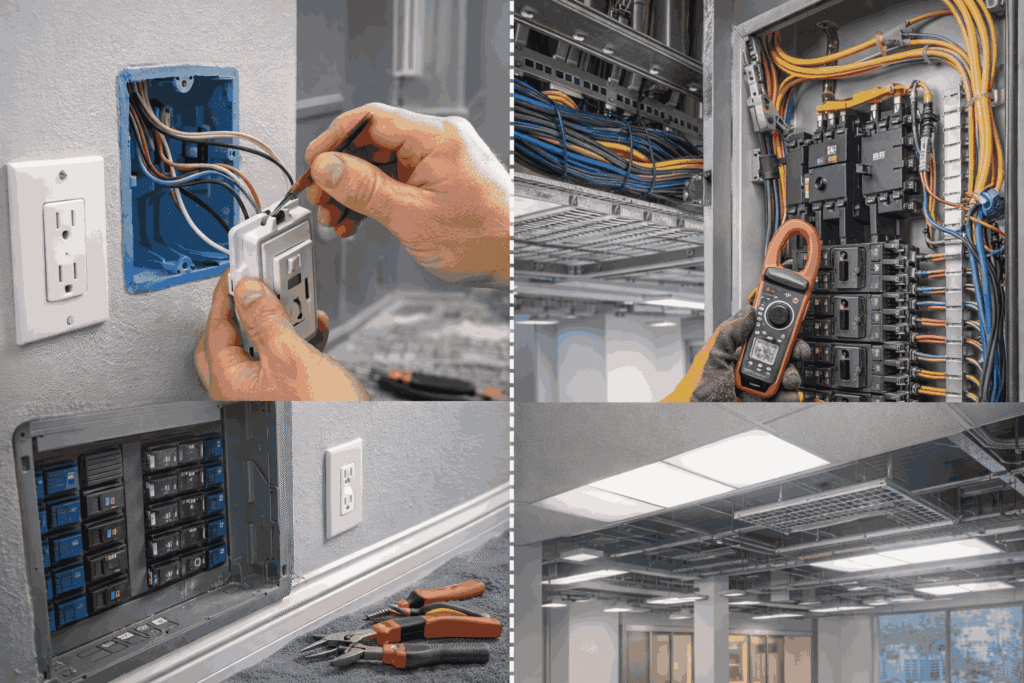

Electrical installations are never one-size-fits-all. The way electricity is designed, distributed, and protected depends heavily on the type of building it serves. Homes and commercial spaces operate under different load demands, safety expectations, and regulatory requirements.
While both must meet the Ontario Electrical Safety Code (OESC), the technical approach varies significantly. Understanding these differences helps property owners plan safer, more efficient projects and choose the commercial electrical installation contractors for the job.
Scope and Load Differences in Residential vs Commercial Projects
The most significant distinction between residential and commercial work lies in the electrical load. A typical home is designed around predictable usage patterns—lighting, appliances, HVAC systems, and personal electronics. In contrast, commercial electrical installations must support higher, often continuous, demand from equipment, lighting zones, and specialized systems.
Commercial spaces may include:
- HVAC units operating for extended hours
- Commercial refrigeration or machinery
- Office equipment and server rooms
- Emergency systems and backup power
These demands require higher-capacity panels, more circuits, and stricter load balancing than most homes need.
Wiring Layouts and Panel Requirements
In homes, wiring layouts are usually centralized and relatively simple. Panels distribute power to bedrooms, kitchens, and living areas with clearly defined circuit groupings. Home electrical installation focuses on comfort, accessibility, and safety for daily living.
Commercial layouts are far more complex. Wiring must accommodate:
- Multiple tenants or departments
- Dedicated circuits for equipment
- Three-phase power in some facilities
- Future expansion without rewiring
Panels in commercial buildings are often larger and segmented to isolate systems and prevent disruptions.
Lighting Installation Considerations for Each Setting
Lighting is another area where installations differ significantly. Residential lighting prioritizes ambiance, energy efficiency, and convenience. Dimmers, pot lights, and accent lighting are standard features in homes.
Commercial lighting must meet functional and regulatory needs. A professional lighting installation company designs systems that ensure:
- Adequate illumination for workspaces
- Emergency lighting compliance
- Energy efficiency across large areas
- Reduced maintenance downtime
Commercial lighting layouts often include motion sensors, centralized controls, and zoning to improve operational efficiency.
Permit and Inspection Rules in Ontario
Both residential and commercial projects require ESA permits, but the inspection process varies in depth and complexity.
Residential permits typically cover:
- Panel upgrades
- New circuits
- Major rewiring projects
Commercial permits often involve multiple inspections, load verification, and coordination with building officials. Larger projects may require staged approvals as work progresses. Failing to follow these procedures can delay occupancy or operations.
Who to Call for Commercial vs Home Projects
Choosing the right contractor matters. Residential electricians are trained to handle home systems, renovations, and safety upgrades. Commercial electricians are experienced with higher voltage systems, complex layouts, and regulatory documentation.
Hiring a contractor without the appropriate experience can lead to design errors, inspection failures, or costly revisions. Matching expertise to the project type ensures smoother execution and compliance.
How Professionals Handle Diverse Installations
Professionals deliver both residential and commercial solutions across the GTA. Their licensed team evaluates each property’s requirements before designing an installation plan that aligns with code and long-term usage.
Our services include:
- Load calculations for homes and businesses
- Panel and circuit installations
- Lighting systems for residential and commercial spaces
- ESA permit filing and inspection coordination
- System upgrades designed for future expansion
This dual capability allows them to manage mixed-use buildings and varied installation needs efficiently.
Choosing the Right Team Saves Time and Ensures Code Compliance
Electrical installations must align with how a building is used—not just how it looks. Homes and commercial spaces demand different planning, materials, and expertise. Working with licensed professionals who understand both environments helps prevent delays, safety risks, and rework. Ensure your project is completed safely, efficiently, and in full compliance with Ontario regulations.