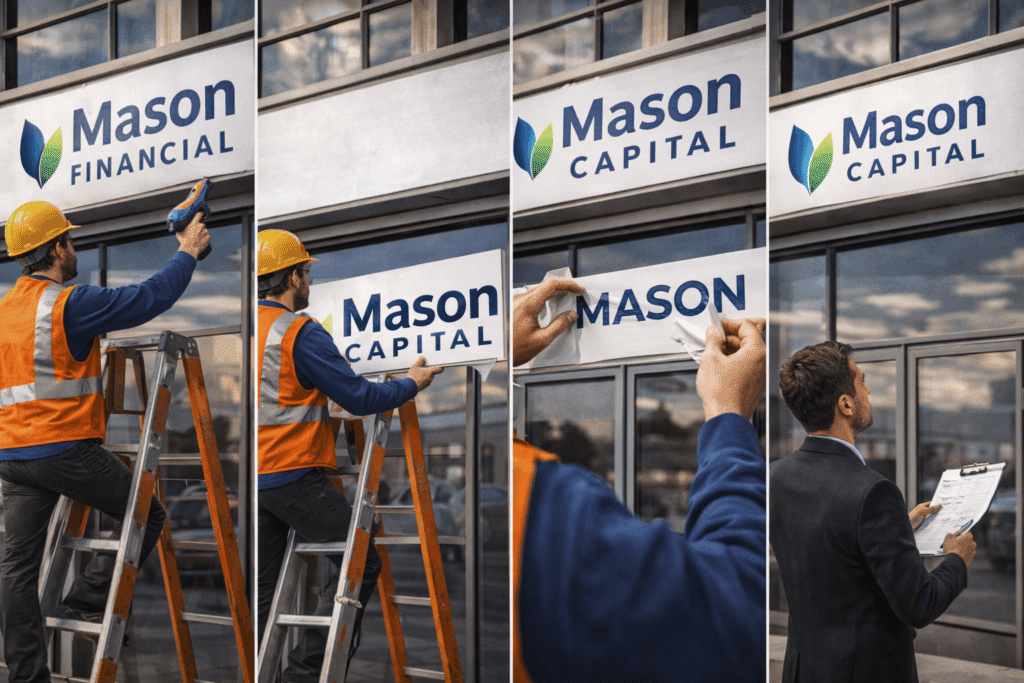

Brand changes rarely happen without pressure. A merger, rebrand, expansion, or shift in positioning often forces organizations to address one visible challenge first: their signage. An outdated business sign creates confusion, weakens brand recognition, and sends mixed signals to stakeholders. Since signage often represents the first physical element of a brand, clear business signs help reinforce credibility, consistency, and long-term trust.
This guide explains how businesses across Canada can update their signs during brand changes. It will help maintain clarity, structure, and minimal disruption, while ensuring the result supports brand alignment and compliance.
Why Business Signs Matter During Brand Transitions
A business sign does more than display a name. It reinforces identity, communicates professionalism, and guides customer expectations. When branding changes but signage does not, the disconnect becomes visible immediately.
Outdated commercial business signs can lead to:
- Brand inconsistency across locations
- Customer confusion or mistrust
- Missed recognition during high-traffic moments
- Delays in full brand rollout
Updating signage at the right time helps ensure the brand transition feels intentional rather than fragmented.
Common Reasons Businesses Update Their Signs
Brand changes can take many forms. Each change impacts signage requirements differently.
Typical triggers include:
- Company rebranding or logo updates
- Business name changes after acquisition or merger
- Expansion into new locations or markets
- Updated colour standards or typography
- Regulatory or municipal compliance updates
Understanding the reason behind the change helps determine whether to refresh existing elements or pursue a full replacement.
Step One: Audit Existing Business Signage
Before planning new signage, it is essential to carefully review existing assets.
Key elements to evaluate:
- Current logo accuracy
- Colour alignment with updated brand standards
- Material condition and visibility
- Readability from distance and angles
- Consistency across all locations
This audit helps avoid unnecessary replacements and identifies signs that may only require partial updates.
Step Two: Align Signage with Updated Brand Standards
Brand changes often include revised guidelines. Signage must reflect these changes accurately.
Elements that require alignment:
- Logo proportions and spacing
- Approved colour palette
- Typeface and letter spacing
- Iconography or graphic elements
Consistency ensures that business or casino signs support the broader brand rollout across digital, print, and physical spaces.
Step Three: Choose the Right Sign Materials
Material selection plays a critical role in durability, appearance, and long-term performance.
Common materials preferred for commercial business signs include:
- Acrylic for clean, modern finishes
- Polycarbonate for impact resistance
- Aluminum composites for exterior signage
- PVC for lightweight interior signs
Material choice should reflect location, exposure, and expected lifespan rather than aesthetics alone.
Step Four: Consider Visibility and Placement
A brand update offers an opportunity to reassess how signage performs in real conditions.
Factors to review:
- Line of sight from streets or entrances
- Lighting conditions throughout the day
- Obstructions resulting from landscaping or structures
- Compliance with municipal size and placement rules
Improving visibility during a sign update can enhance brand recognition without increasing sign size.
Step Five: Plan for Business Continuity
Sign updates should support brand transition without disrupting daily operations.
Best practices include:
- Coordinating installation during off-hours
- Using temporary signage when required
- Phasing updates across multiple locations
- Communicating changes internally before installation
Careful planning reduces downtime and avoids confusion during the transition period.
Step Six: Ensure Compliance with Local Regulations
Signage updates often require adherence to municipal bylaws and property guidelines.
Areas commonly regulated:
- Sign dimensions and projection
- Illumination type and brightness
- Placement height and distance from roadways
- Heritage or zoning restrictions
Compliance avoids delays, penalties, and costly rework after installation.
Step Seven: Maintain Consistency Across All Locations
For businesses operating across Canada, consistency matters as much as accuracy.
A structured approach helps ensure:
- Uniform materials and finishes
- Consistent branding across regions
- Predictable installation outcomes
- Easier future updates
Centralized planning supports long-term brand stability and simplifies future signage changes.
Common Mistakes to Avoid During Sign Updates
Even well-planned brand changes can face setbacks.
Frequent issues include:
- Updating logos but not colours or typography
- Replacing exterior signs while ignoring interior signage
- Selecting materials based only on cost
- Overlooking lighting and visibility testing
Avoiding these missteps helps ensure casino supplies and signage support the brand rather than undermine it.
The Role of Fabrication in Successful Sign Updates
Sign design is only part of the process. Fabrication quality determines how the sign performs over time.
Precision fabrication ensures:
- Clean edges and accurate dimensions
- Proper material bonding and finishes
- Structural integrity in outdoor conditions
- Consistent appearance across sign types
Well-fabricated business signs reduce maintenance needs and extend service life.
Supporting Brand Transitions with the Right Signage Partner
A brand change is only complete when it is visible, consistent, and understood. Business signs play a direct role in that process. When planned thoughtfully, signage updates reinforce credibility, improve recognition, and support long-term brand clarity.
Businesses undergoing brand changes benefit from working with teams that understand materials, fabrication, and commercial requirements. Reliable commercial signage suppliers align with updated branding while meeting durability and compliance requirements.