
Industrial and commercial metal surfaces in Chicago are constantly under stress from corrosion, wear, and environmental exposure. Over time, these conditions compromise surface integrity and degrade coating performance if left unaddressed. A sandblasting service plays a critical role in correcting surface defects that interfere with coating adhesion, corrosion resistance, and long-term durability.
Surface problems rarely exist in isolation. Rust, contamination, coating buildup, and surface irregularities often occur together, creating compounded risks for asset performance. Professional sandblasting restores surfaces to a condition suitable for reliable recoating and long-term service.
What Sandblasting Services Do in Surface Preparation
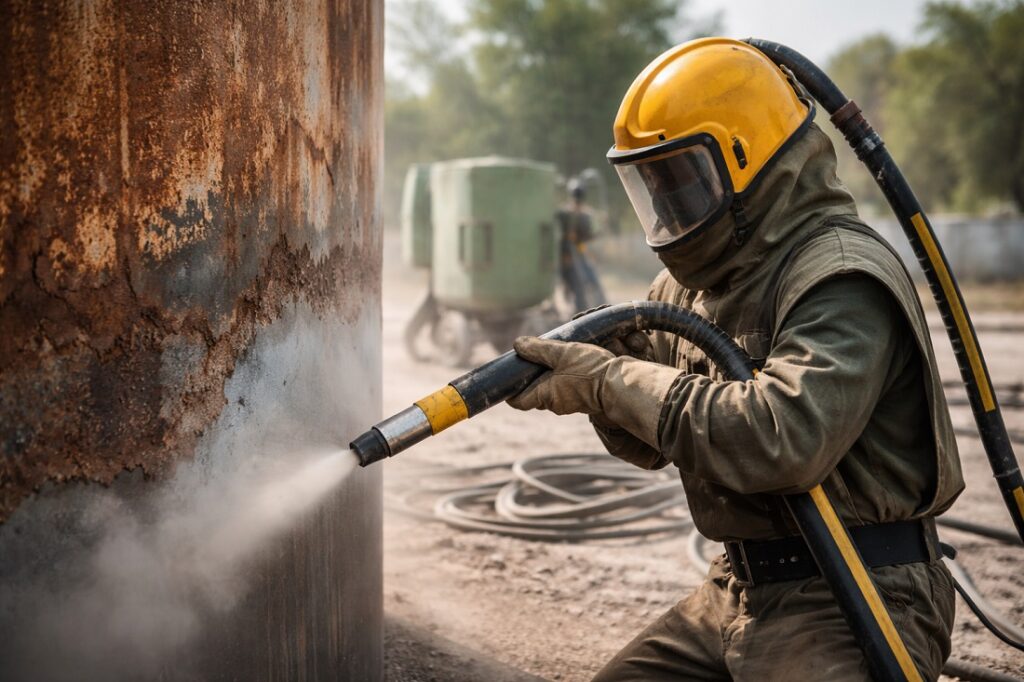
Sandblasting removes surface contaminants and creates a controlled surface profile that supports coating adhesion. Beyond cleaning, the process corrects defects that cannot be resolved through chemical cleaning or mechanical scraping alone. Proper sandblasting ensures surfaces are structurally sound, uniformly textured, and ready for protective coatings.
1. Heavy Rust and Oxidation Buildup
Rust and oxidation weaken metal surfaces and accelerate corrosion once coatings fail. Heavy corrosion often penetrates beneath existing finishes, making surface-level cleaning ineffective.
Sandblasting removes corrosion down to clean metal, eliminating oxidation and preparing the surface for long-term protection.
2. Old Paint and Coating Layers
Layered coatings accumulate over time, reducing adhesion and increasing the risk of failure. Old paint may also conceal corrosion or surface defects.
Sandblasting removes previous coatings completely, creating a clean substrate that allows new coatings to bond properly.
3. Mill Scale on New Steel
Mill scale forms during steel manufacturing and prevents coatings from adhering directly to the metal surface. If left untreated, mill scale leads to premature coating failure.
Sandblasting effectively removes mill scale, exposing clean steel and ensuring proper coating adhesion.
4. Oil, Grease, and Industrial Contaminants
Industrial environments expose surfaces to oils, lubricants, and airborne contaminants, which can interfere with coating performance. These residues often remain embedded in surface textures.
Sandblasting removes contaminants that conventional cleaning methods may leave behind, restoring surface cleanliness.
5. Corrosion in Hard-to-Reach Areas
Corrosion frequently develops in corners, seams, welds, and recessed areas where cleaning tools cannot reach effectively. These areas become weak points under coatings.
Sandblasting reaches complex geometries, ensuring consistent cleaning across the entire surface.
6. Surface Pitting and Irregular Texture
Surface pitting and uneven textures compromise coating uniformity and reduce corrosion resistance. These defects often result from prolonged exposure or previous coating failures.
Sandblasting smooths irregular surfaces and establishes a uniform profile, supporting consistent coating thickness.
7. Heat Scale and Welding Residue
Welding introduces heat scale, slag, and residue that interfere with coating adhesion. These byproducts are difficult to remove solely through mechanical methods.
Sandblasting removes welding residue and heat scale, restoring surface consistency before coating application.
8. Concrete Surface Contamination and Coating Failure
Concrete surfaces are prone to laitance, embedded contaminants, and old coatings that reduce adhesion. These issues often lead to coating delamination.
Sandblasting cleans and profiles concrete surfaces, improving coating performance in industrial and commercial settings.
9. Adhesion Failures from Improper Surface Prep
Many coating failures result from inadequate surface preparation rather than coating material defects. Smooth or contaminated surfaces prevent proper bonding.
Sandblasting creates the surface profile required for coatings to adhere reliably and perform as intended.
Choosing the Right Sandblasting Method for Each Surface Problem
Different surface problems require different blasting approaches. Abrasive selection, pressure control, and technique must align with the substrate and defect being addressed. Matching the method to the problem ensures effective cleaning without damaging the underlying material.
How Professional Sandblasting Services Prevent Rework and Premature Failure
Professional sandblasting providers apply controlled processes that address surface problems at their source. Proper preparation reduces coating failure, minimizes rework, and supports predictable service life.
Integrated surface preparation improves coating performance and reduces long-term maintenance costs.
When Sandblasting Services Are the Best Solution
Sandblasting is the preferred solution when surfaces suffer from heavy corrosion, layered coatings, embedded contaminants, or complex geometry challenges. In these cases, alternative cleaning methods often fall short.
Professional sandblasting service operations in Illinois restore surfaces efficiently while preserving substrate integrity.
Why Sandblasting Services Solve Problems Other Methods Can’t
Surface problems compromise coating performance, asset reliability, and service life. Rust, contamination, coating buildup, and surface irregularities require more than surface-level cleaning.
Professional Powder Coating delivers controlled surface preparation solutions that address complex surface defects before coating application. By supporting sandblasting services in Illinois, the focus remains on restoring surfaces to a condition that supports durable coatings and long-term performance.
Connect with the team today to discuss sandblasting solutions that eliminate surface issues and protect asset integrity.