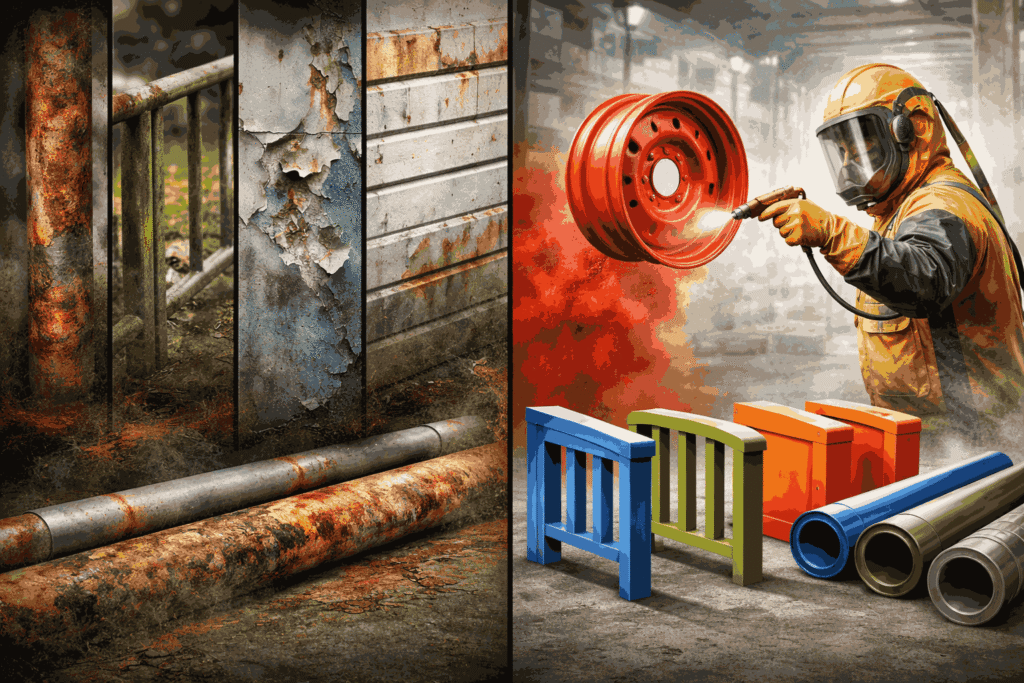

Coating systems are specified with the expectation of long-term durability, yet failures continue to surface across industrial and commercial projects. Rust breakthrough, peeling edges, and surface breakdown are often traced back to overlooked preparation steps or inconsistent application practices rather than the coating material itself.
For asset owners and project managers, the real cost of coating failure extends beyond appearance. Downtime, structural repairs, and repeated maintenance cycles can significantly impact budgets and operational timelines. Preventing these risks requires controlled processes, compliance with standards, and engineered application methods, which is why many organizations rely on advanced powder coating services in Toronto to protect critical infrastructure and fabricated metal components.
1. Premature Corrosion Due to Improper Surface Preparation
Surface contamination remains one of the leading causes of coating breakdown. Rust scale, oil residue, mill scale, and embedded salts can interfere with adhesion when substrates are not properly prepared.
Without SSPC-compliant abrasive blasting, the powder adheres superficially rather than mechanically bonding to the metal surface. Moisture intrusion then spreads beneath the coating, accelerating corrosion from within.
Advanced metal powder coating services in Ontario begin with controlled surface preparation. Abrasive blasting establishes a defined anchor profile, removes contaminants, and creates the proper foundation for long-term corrosion resistance.
2. Coating Delamination and Adhesion Failure
Delamination often results from inadequate curing or insufficient surface profiling. When the powder does not fully cross-link during curing or when the substrate is not properly prepared, adhesion weakens under mechanical or environmental stress.
Industrial applications such as energy infrastructure, heavy equipment and machinery, and commercial structural steel require coatings that maintain strong mechanical bonding. Controlled electrostatic application and monitored curing temperatures produce a dense, durable film that resists separation.
Adherence to ASTM and SSPC standards ensures consistent adhesion performance across projects in Ontario.
3. Inconsistent Film Thickness Leading to Early Degradation
Uneven film build creates vulnerable points. Thin edges and weld seams are susceptible to impact and corrosion, while excessive thickness may lead to cracking during thermal expansion.
Professional coating facilities utilize calibrated equipment and automated systems to maintain uniform film thickness across complex geometries. Electrostatic wrap-around coverage improves consistency, especially around corners and detailed fabrication.
Controlled thickness directly contributes to predictable performance and reduced early-stage degradation.
4. Environmental Breakdown in Harsh Ontario Conditions
Infrastructure in Ontario is subject to freeze-thaw cycles, moisture exposure, UV radiation, industrial pollutants, and road salt contamination. These environmental stressors place continuous pressure on protective systems.
Powder coatings form a uniform, cross-linked barrier that resists UV degradation and chemical attack more effectively than many conventional liquid systems.
Coatings aligned with UL certifications, CSA standards, and NEMA classifications, where applicable, provide measurable durability for commercial buildings, energy facilities, and marine shipyard components. This standards-driven approach reduces environmental breakdown and improves long-term reliability.
5. Accelerated Maintenance Cycles and Lifecycle Cost Escalation
When coatings fail prematurely, maintenance schedules tighten. Recoating requires additional surface preparation, labor allocation, and potential downtime.
Lifecycle cost escalation becomes substantial for municipalities, utilities, and large-scale commercial developments.
High-performance powder systems extend service intervals and reduce recurring repair expenses. Investing in engineered preparation and controlled application prevents the need for repeated remediation cycles.
The Role of Standards-Driven Powder Coating in Ontario
Durable coating systems depend on strict quality control. Facilities operating under ASTM and SSPC standards implement inspection protocols before, during, and after application to ensure measurable compliance.
Architectural aluminum applications may align with AAMA standards, while steel substrates follow engineered internal specifications. Coatings adhere to UL certifications, CSA standards, and NEMA requirements where applicable.
This structured approach ensures reliable performance across energy infrastructure, commercial construction, heavy equipment, and marine environments throughout Ontario.
Preventing Failure Is More Cost-Effective Than Recoating
Coating failure impacts asset integrity, operational continuity, and long-term budgets. Preventative strategies grounded in proper surface preparation, calibrated application, and compliance-driven processes significantly reduce risk.
Professional Powder Coating delivers engineered systems designed to prevent corrosion, delamination, and environmental degradation across industrial and commercial applications. With strict adherence to industry standards and controlled processes, coating performance becomes consistent and predictable.
Organizations seeking dependable powder coating services in Ontario can contact Professional Powder Coating to implement durable solutions that protect assets and reduce lifecycle costs.